Home/Raccoons
Raccoon Removal in Shreveport
Raccoons do more structural damage than any other animal that gets into a house, and in Shreveport they are the single most common call.
The disused masonry chimney is the classic Highland raccoon job. The housing predates central heating, which leaves a flue that is frequently uncapped and is the one part of the house nobody can see into. Chimney litters are almost always found by sound rather than sight, and by then the kits are the whole problem: the mother can leave and they cannot.
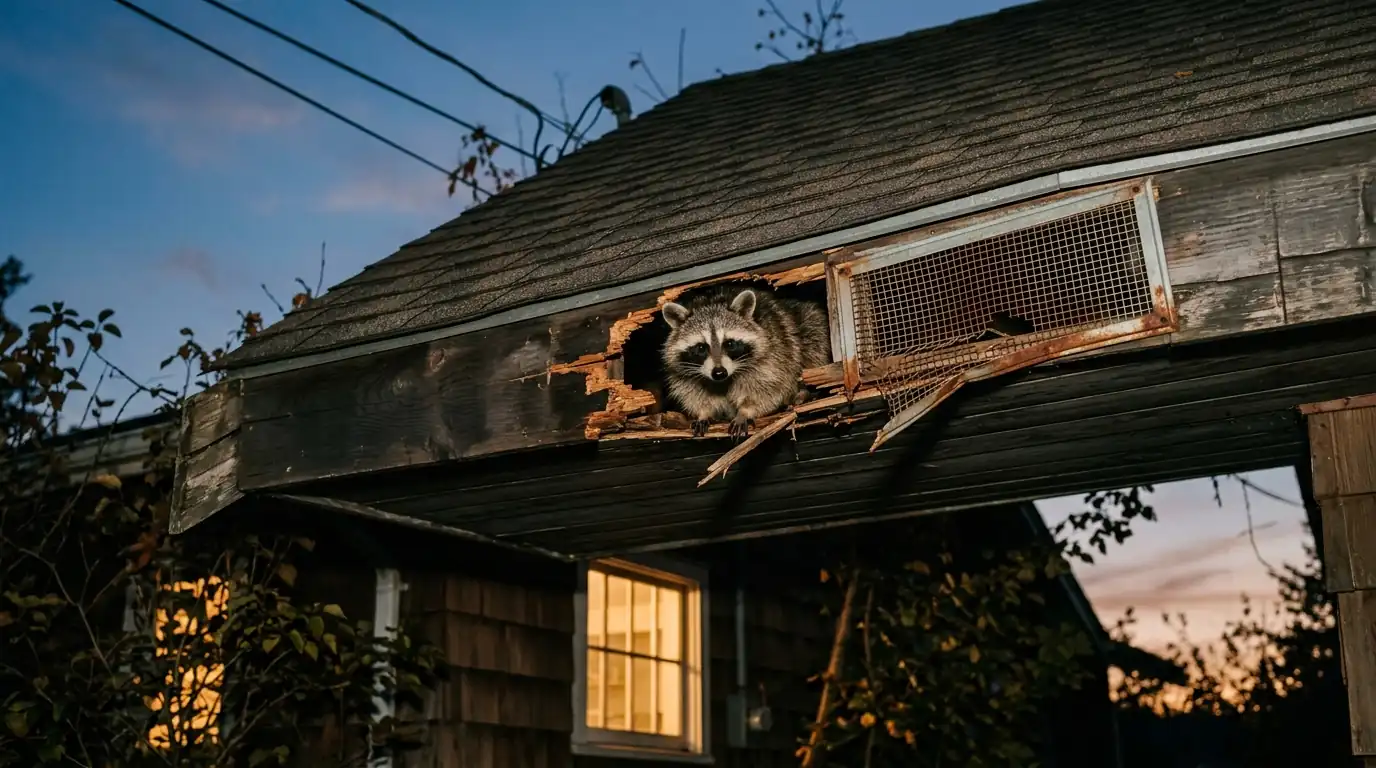
How you know it is raccoons
- Heavy, deliberate footsteps overhead: raccoons are big enough to sound like a person walking
- Chittering, growling or the distinctive cry of kits, usually at dusk or just before dawn
- A torn soffit, lifted shingles, or a ripped roof or gable vent
- Droppings in the attic: large, dark, often in a latrine area they return to
- Tipped bins, torn lawn turf, prints in mud or on the deck rail
Why it matters
- Rabies: raccoons are a primary rabies vector across the southeastern United States
- Raccoon roundworm (Baylisascaris) in the droppings, which is dangerous to people and pets
- Contaminated and flattened insulation, which stops working and has to be removed
- Chewed wiring and torn ductwork
- Urine and faeces soaking into ceiling drywall until it stains or fails
Somebody has to look at the property to answer that. How many entry points or burrows there are, how hard they are to get at, and whether young are present is what sets the price, and none of it can be judged from a description. Send us your address and licensed local operators will quote the inspection and the work. Request free quotes →
How removal actually works
A licensed operator finds every entry point, removes the animal, and critically any kits, which are usually hidden in a wall cavity or soffit and cannot leave on their own, then seals the openings with materials a raccoon cannot tear off. Sealing before the young are out is the most common and most expensive mistake.
Timing
Spring is the worst time to trap and seal: females den in attics to give birth, and removing the mother while kits remain leaves them to die inside the structure.
What it costs
Removal is only part of it. Where an animal has been in an attic for a while, the contaminated insulation and droppings are usually the larger bill: what attic restoration involves →
What Louisiana law requires
Louisiana runs the most demanding regime of the states we cover. Every NWCO must carry a valid LDWF permit while working, and permits are issued to individuals only: each person doing the work needs one in their own name, so a company permit does not cover an unlicensed employee. Operators must be 18 or over, must hold both a valid Louisiana trapping licence and a valid Louisiana basic hunting licence while working, and must score at least 80 percent on the LDWF NWCO examination covering wildlife biology and behaviour, control methods, and the law. Permits run on a calendar year and must be renewed annually. Full Louisiana rules →
Raccoon questions
How much does Raccoon removal cost in Shreveport?
$300 – $600 for removal; far more if the attic needs restoring. The spread comes down to how many entry points there are, how hard the roof or crawlspace is to reach, and whether young are present. Anyone quoting a firm price before seeing the property is guessing.
How quickly can someone come out?
Most raccoons calls in Shreveport are handled within a day or two. If an animal is loose inside your living space, or there is a bite or scratch involved, say so when you make contact; that changes the priority.
Can I just do it myself?
Sometimes, legally speaking. But the two things that go wrong are sealing an entry point while young are still inside, and handling an animal that turns out to be a rabies vector. Both are expensive mistakes, and one is dangerous.
Is there a wrong time of year for this?
Spring is the worst time to trap and seal: females den in attics to give birth, and removing the mother while kits remain leaves them to die inside the structure.
Request free quotes
Licensed wildlife operators covering Shreveport will contact you directly. There is no charge and no obligation.